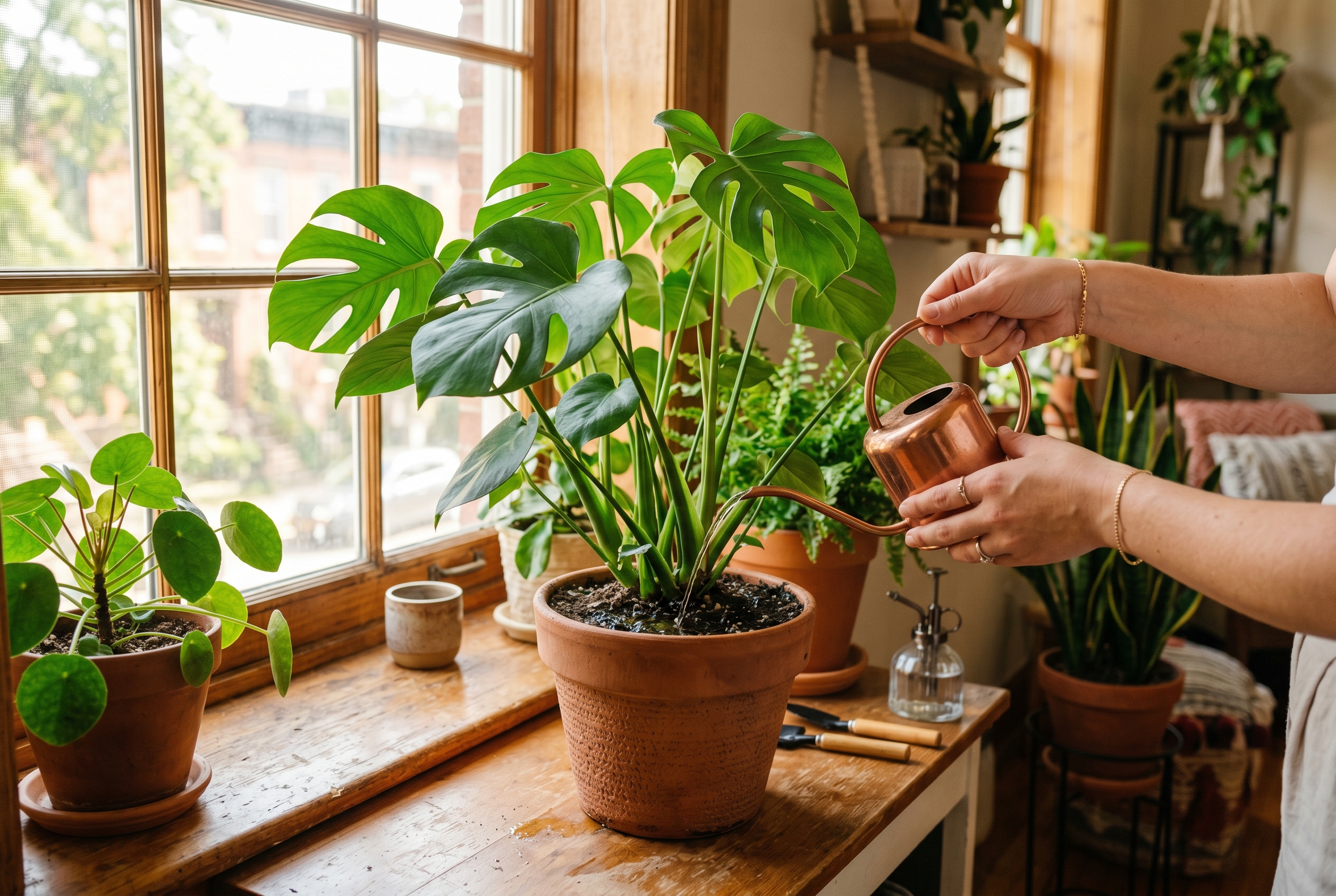
How Often Should You Water Houseplants?
Learn how often to water houseplants using soil checks, seasonality, and pot signals instead of a fixed schedule.
- Check soil first, not the calendar
- Water when the top layer is dry for most common houseplants
- Reduce frequency in winter and low light
- Use pot weight and drainage as your best beginner signals
Why fixed watering schedules fail
Most beginners want a once-a-week rule, but plants do not drink on a schedule. Light, airflow, pot size, and soil change how quickly a container dries.
Use the dry-check method
Push a finger into the top layer of soil and lift the pot if you can. Damp soil and a heavy pot usually mean wait. Dry soil and a lighter pot usually mean it is time to water.
How seasons change watering
Plants usually use less water in winter and more during active growth. Lower light and cooler rooms slow drying, so repeated watering on autopilot is a common beginner mistake.
Signs of overwatering vs underwatering
Overwatering often shows up as yellow leaves, limp stems, and soil that stays wet. Underwatering tends to cause drooping, crispy edges, and bone-dry soil pulling from the pot sides.
Simple beginner routine
Check every few days, water only when needed, and always let excess water leave the pot. A calm repeatable routine beats complicated plant care hacks.
FAQ
Should I use a moisture meter? It can help, but many beginners do well with finger checks and pot weight.
Is bottom watering necessary? Not always. Proper drainage and not watering too often matter more than the method itself.