Beginner Guide to Repotting Houseplants
Learn when and how to repot houseplants, how to size up correctly, and how to help plants recover after repotting.
- Repot when roots are crowded or growth has stalled
- Move up only one pot size in most cases
- Use fresh airy mix and avoid crushing roots
- Give the plant a short recovery period after repotting
When a plant actually needs repotting
Root crowding, very fast drying, stalled growth, or a badly degraded soil mix are stronger signs than simply owning the plant for a while.
Best time to repot
Spring and early summer are usually easiest because active growth helps the plant recover. Emergency repotting is still worth doing when root rot or severe compaction appears.
How to repot step by step
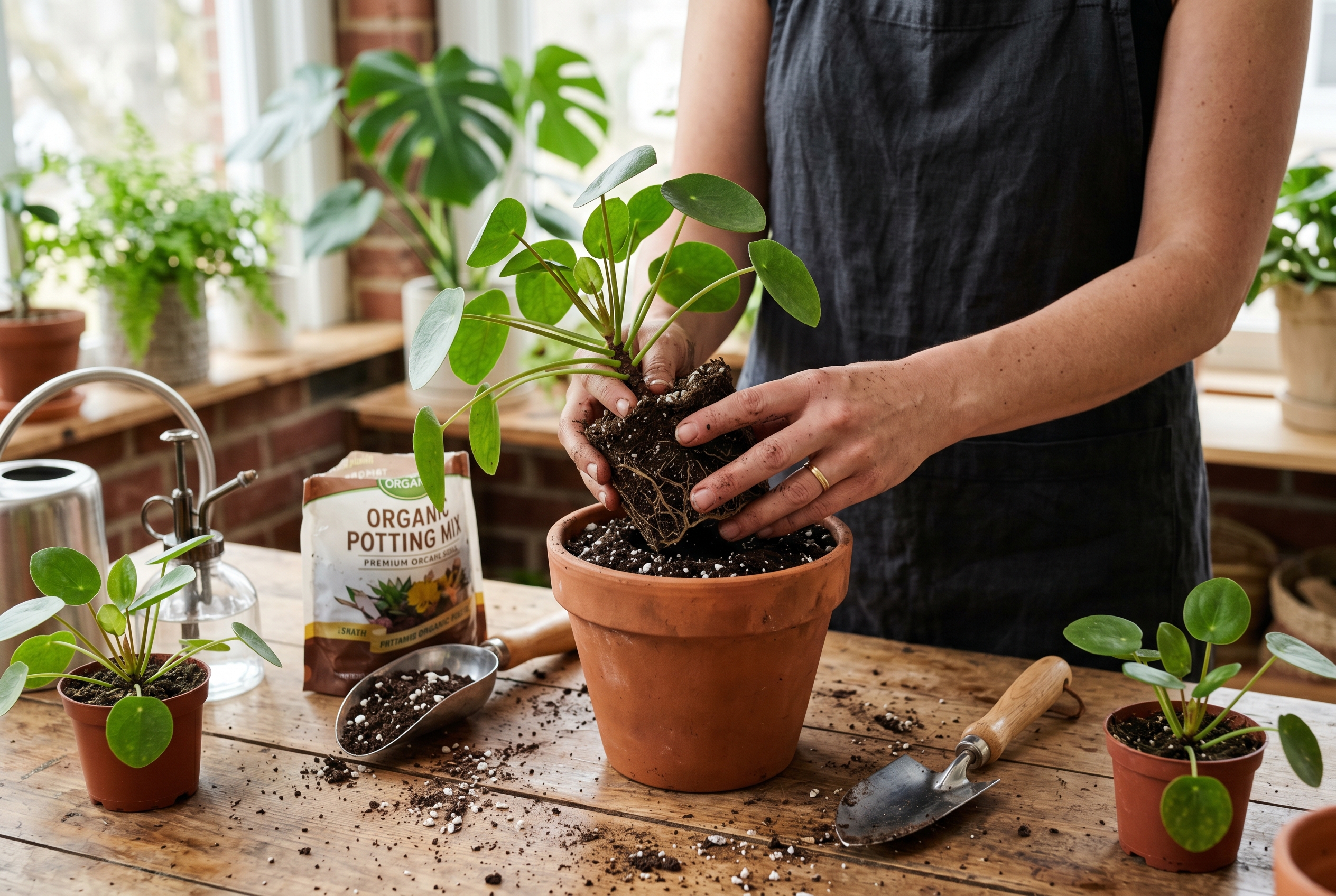
Choose a slightly larger pot, loosen compacted outer roots gently, add fresh mix around the root ball, and water lightly so the new soil settles.
Common repotting mistakes
Huge pot upgrades, dense soil, damaged roots, and immediate harsh sun exposure create extra stress. Simpler is usually better.
Aftercare that improves recovery
Keep the plant in bright indirect light, avoid heavy feeding right away, and let the roots re-establish before changing too many variables.
FAQ
Should I break apart roots aggressively? No. Only loosen circling roots gently unless the plant is severely bound.
Should I fertilize right after repotting? Usually no. Fresh mix and stable conditions matter more in the short term.